The Owner-First Reporting Model: Why Monthly Reports Beat Dashboards
Most property owners receive dashboards they never open. Here is why a focused five-minute monthly report builds more trust — and produces better decisions — than data-heavy portals.
Selly Marketing & Promotions
Jul 22, 2026 · 9 min read
The Problem With Dashboards Nobody Opens
Most property management platforms give owners a dashboard. It updates in real time, tracks dozens of metrics, and looks impressive in a demo. It also goes unread by the majority of owners who receive it.
The issue is not that owners are disengaged. The issue is that dashboards are built for analysts, not for owners. They present data without context, volume without hierarchy, and activity without accountability.
Two professionals reviewing investment analysis charts
This post makes the case that a well-structured, five-minute monthly report is not a step backward from a dashboard. It is a significant step forward — for trust, for decision quality, and for the kind of operator-owner relationship that holds through a full hold period.
What a Dashboard Actually Delivers
Dashboards deliver data availability, not data clarity. Those are different things.
The Data Availability Trap
When a platform gives an owner 24/7 access to occupancy charts, booking windows, cleaning logs, and maintenance tickets, the implicit message is: here is everything, figure out what matters. That is not a service. That is a data transfer with the interpretation cost offloaded to the owner.
Most owners — particularly those managing between three and twenty units — did not acquire a short-term rental portfolio because they wanted to become data analysts. They acquired assets because they want reliable cash flow, a well-maintained property, and an operator they can trust to flag problems before they become expensive.
A dashboard satisfies none of those needs on its own. It requires the owner to log in, orient themselves to the interface, identify the relevant metrics, benchmark those metrics against something meaningful, and then decide what action — if any — to take. That is a significant cognitive load placed on someone who is, by design, supposed to be a passive participant.
Drift is where trust erodes. Not because anything went wrong, but because the communication structure stopped requiring either party to show up.
What the Owner-First Reporting Model Does Differently
The owner-first reporting model starts from a different premise: the operator's job is not to provide data access, it is to deliver a clear, readable account of what happened, why it matters, and what comes next.
A report built on this model can be read in five minutes. Not because it is thin — but because it is structured around what the owner actually needs to know.
Five Minutes Is a Design Constraint, Not a Limitation
Five minutes does not mean shallow. It means disciplined curation. Every metric included in a five-minute owner report has earned its place by answering one question: does this change how the owner evaluates their asset or their operator?
If the answer is no, it does not go in the report.
The metrics that consistently earn a place in a well-structured STR owner report are:
Revenue for the period — actual gross bookings received
Average Daily Rate (ADR) — compared to the same period in the prior year
Occupancy rate — against the market benchmark for the submarket
RevPAN (Revenue Per Available Night) — the one number that captures pricing efficiency and occupancy together
Guest rating — and any review that requires the owner's awareness
Maintenance items — resolved items noted, open items flagged with resolution timeline
Notable context — one paragraph on market conditions, seasonal factors, or platform changes that explain the numbers
That is the report. Seven elements. Five minutes. Everything the owner needs to evaluate performance and extend trust.
The Narrative Layer That Dashboards Cannot Provide
The most important element in the list above is the last one: context. A dashboard can show that occupancy dropped from 81% to 71% in October. It cannot explain that the local festival that drove October bookings last year was cancelled, that Selly responded by launching a targeted Meta campaign to drive direct bookings, and that the resulting ADR increase partially offset the occupancy softness — producing a RevPAN figure that was only 4% below the prior October despite the event loss.
That narrative is the difference between an owner who calls in a panic and an owner who reads the report, nods, and moves on with confidence. The math is the same in both cases. The trust outcome is completely different.
This is what Selly means by owner-first Airbnb property management: the report is structured around the owner's decision-making needs, not around the operator's data infrastructure.
Real-time access sounds better than monthly reporting. It is not, for most owners.
The Problem With Real-Time Visibility Into Operations
Real-time data creates the conditions for reactive decision-making. An owner watching nightly occupancy figures in mid-month is almost certain to draw conclusions from incomplete information. A Thursday that looks slow is not a performance problem — it is Thursday. A week with three maintenance requests is not a maintenance crisis — it is a week.
Monthly reporting imposes a natural evaluation window that aligns with how performance actually accrues. Revenue, occupancy, and ADR are meaningful at the monthly level. At the daily or weekly level, they generate noise.
Accountability Is Highest When Reporting Is Structured
A monthly report with a fixed delivery date — say, the fifth of each month for the prior month's data — creates a mutual accountability structure. The operator knows when the report is due. The owner knows when to expect it. Neither party can defer the conversation.
This structure produces better operator behavior than dashboard access does. When a report must be written and sent, the operator is forced to synthesize performance into a coherent narrative. That synthesis requires honest engagement with the numbers. A dashboard can be left alone. A report cannot.
The math behind Selly's 94% LP re-up rate is, in part, a communication story. Operators who retain capital do not just perform — they report clearly, consistently, and at a cadence the investor can plan around.
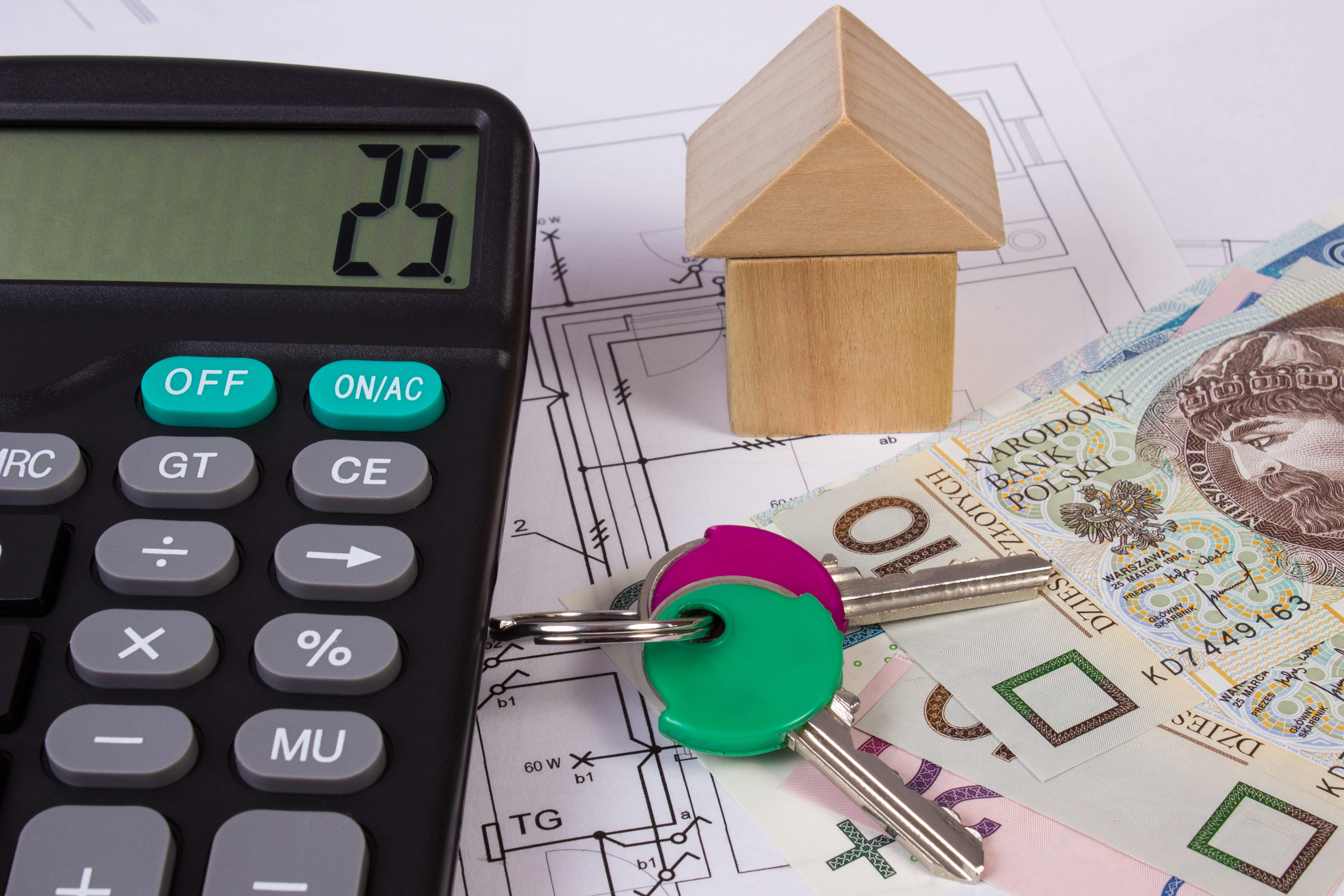
Calculator and house model on blueprint for investment
How Owner-First Reporting Builds Long-Term Trust
Trust in a property management relationship is not built through performance alone. It is built through consistent, clear communication about performance — including when performance is below expectations.
Transparency About Underperformance Is a Trust Accelerant
The instinct in any management relationship is to present the best possible picture. That instinct is understandable and, in the short term, effective. Over a 12- or 24-month hold period, it destroys trust.
When an owner-first report flags a down month — states plainly that occupancy was 68% against a target of 78%, explains the causal factors, and outlines the specific response — the owner's reaction is almost always stronger trust, not weaker. The operator has demonstrated that they are watching the asset as carefully as the owner would, that they are not papering over problems, and that they have a plan.
This is what Selly calls operator-aligned reporting. It is not a report designed to make the operator look good. It is a report designed to make the owner's decision-making as clear as possible.
The Five-Minute Standard as a Respect Signal
A five-minute monthly report also signals something important about how the operator values the owner's time. An operator who sends 40-page decks or expects the owner to navigate a complex portal is, implicitly, asking the owner to do work. An operator who delivers a crisp, structured, narrative report is demonstrating that they have already done the work — and they are respecting the owner's role as capital allocator, not day-to-day manager.
For owners who followed Selly's guidance in what 180 properties taught us about what owners actually want, this is a recurring theme: owners do not want to be managed out of their own asset's performance. They want to be informed at the level of their actual responsibility.
The reporting logic that makes the five-minute monthly report effective in short-term rental management applies equally to other asset classes where operator-owner communication determines relationship quality.
Multifamily Reporting That Operators Can Stand Behind
In multifamily, the equivalent of the dashboard problem is the weekly traffic report — a spreadsheet of leads, tours, and applications that the owner receives without context and without a clear answer to the question: are we on track?
Selly's occupancy stabilization program is built around the same principle: weekly performance data is synthesized into a clear occupancy trajectory report that answers two questions — where are we, and what happens next. Owners of multifamily assets in lease-up or re-stabilization phases do not need a traffic dashboard. They need to know if the leasing campaign is closing the gap.
For context on how reporting connects to leasing outcomes, the leasing velocity framework for filling units faster covers the operational side of what drives the numbers that appear in a well-structured owner report.
Syndication Reporting and LP Retention
In capital raises, the owner-first reporting model translates to investor updates that are sent on schedule, written in plain language, and structured around the metrics that matter to LPs: distributions, capital account balance, hold period progress, and any material changes to the business plan.
LPs who receive clear, consistent updates re-invest. LPs who receive infrequent, jargon-heavy, or overly optimistic reports do not. The 94% LP re-up rate Selly's operator network has maintained is not an accident — it is the direct result of reporting discipline applied consistently across the hold period.
Frequently Asked Questions
Yes, when the report is structured correctly. A five-minute report covers the seven metrics that determine owner decision-making: revenue, ADR, occupancy, RevPAN, guest rating, maintenance status, and market context. Additional detail is always available on request — the report establishes the baseline; deeper dives happen when the numbers warrant it.
RevPAN — Revenue Per Available Night — is the metric that captures both pricing efficiency and occupancy in a single figure. A property at 90% occupancy priced too low can underperform a property at 75% occupancy priced correctly. RevPAN shows the combined outcome and is the only figure that accurately benchmarks overall STR performance.
Routine operational updates — cleaning logs, minor maintenance, guest reviews — should not require owner involvement. The monthly report handles scheduled performance communication. The only time operators should contact owners outside the report cycle is when a decision requires owner input: a capital expenditure above a pre-set threshold, a material platform change, or a situation with a guest that has legal or liability implications.
The structure and the audience. A standard management summary is often written to justify the operator's actions. An owner-first report is written to serve the owner's decision-making. The difference shows up in how underperformance is handled: owner-first reports flag problems clearly, explain causes, and state the response. Standard summaries often bury bad months in volume.
Yes. The principle scales. For multifamily, the weekly performance snapshot replaces the monthly report during active lease-up phases — then shifts to monthly once stabilization is reached. The core design constraint remains the same: the report must answer are we on track in under five minutes, without requiring the owner to interpret raw data.
Property management relationships last as long as the trust holds. Trust holds as long as communication is clear, consistent, and structured around what the owner actually needs to know.
A real-time dashboard gives owners data. A monthly owner-first report gives owners clarity. These are not equivalent. Across a 12-month management engagement or a 48-month hold period, the compounding effect of that difference is measurable in retention rates, re-investment decisions, and the quality of the operator-owner relationship when something goes wrong.
Selly's Airbnb property management service is built on the principle that operators who report clearly retain owners who reinvest. If you want to see what an owner-first reporting structure looks like applied to your asset, submit your property for review and the team will walk you through the onboarding audit and reporting framework before any engagement begins.