Why Most Airbnb Listings Fail in the First 90 Days — and How to Avoid It
Most Airbnb listings lose their competitive window in the first 90 days due to avoidable setup errors. This post covers what actually drives early momentum — and how to lock it in.
Selly Marketing & Promotions
Oct 12, 2026 · 9 min read
Why Most Airbnb Listings Fail in the First 90 Days — and How to Avoid It
Most Airbnb listings don't fail because the property is bad. They fail because the first 90 days are mismanaged — and Airbnb's algorithm doesn't forgive slow starts. The errors are almost always the same: weak photography, mispriced nights, slow guest response, and a listing that was never built to convert. This post breaks down exactly what goes wrong in that critical window and the setup steps that lock in early momentum before the algorithm moves on.
Why the First 90 Days on Airbnb Are Not Optional
Airbnb's search algorithm treats new listings differently during their initial visibility window. New listings receive a temporary boost in search placement — a mechanic designed to generate early reviews and booking data quickly. That boost is finite. If a listing doesn't accumulate bookings and positive reviews within the window, it loses its elevated placement and gets deprioritized against established competitors with review history.
This means the first 90 days function as an audition. The algorithm is watching conversion rate, acceptance rate, response time, and review scores. A listing that performs well early earns sustained placement. A listing that doesn't gets buried — often permanently, without a major intervention.
According to AirDNA's research on why Airbnb listings fail to generate bookings, most underperforming listings share the same structural problems: uncompetitive pricing, low-quality photos, and listings that were optimized for the owner's preferences rather than the guest's search behavior.
The Five Mistakes That Kill New Listings Early
Mistake 1: Overpricing Before the Listing Has Any Reviews
Pricing a new listing at market rate — or above it — is one of the most common early errors. An established listing with 200 five-star reviews can command full market rate. A new listing with zero reviews cannot. Guests are rational: they absorb the risk of booking an untested property only when the price justifies it.
The correct opening strategy is a deliberate discount — typically 10 to 20 percent below comparable listings in the submarket — held for the first three to five bookings. The goal is not to leave money on the table permanently. It is to generate the review stack that unlocks competitive pricing. Operators who skip this step often wait weeks for the first booking, burning through the algorithm window while established competitors fill their calendars.
Mistake 2: Photography That Reads as Amateur
Listing photography is the single highest-leverage variable in Airbnb conversion. Guests decide whether to click through a listing based on the thumbnail. They decide whether to book based on the full photo set. A guest browsing on mobile at 11pm is not reading your amenity list — they are looking at the photos.
Professional photography is not optional for a property being run as an income-producing asset. This means wide-angle lenses, natural light, staged furniture, and a shot sequence that tells a story: exterior, living room, kitchen, primary bedroom, bathroom, outdoor space, and the one detail shot that makes the property memorable. Dim, cluttered, or phone-quality photos do not just reduce conversion — they signal to guests that the hosting experience will be equally unprofessional.
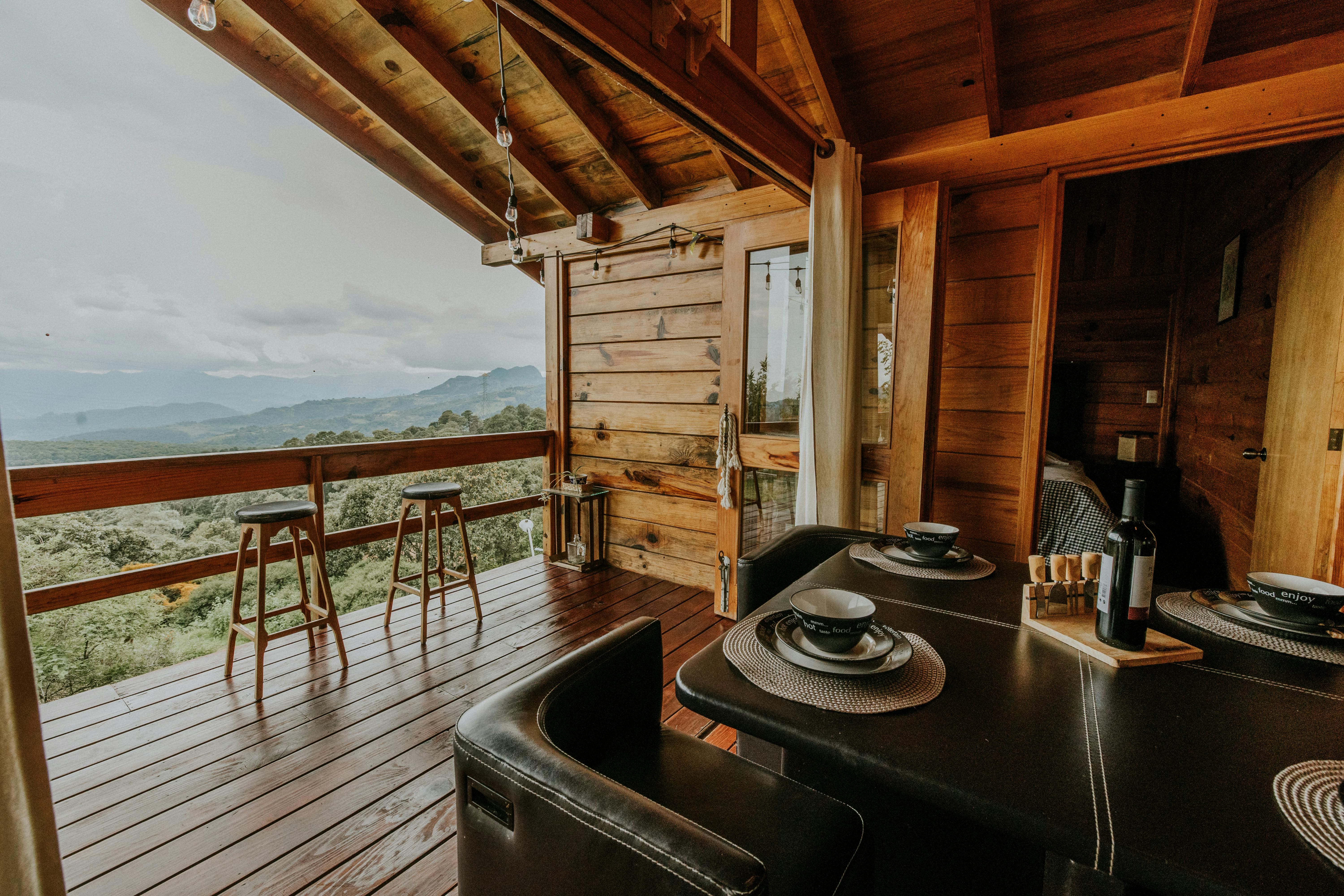
STR cabin deck with mountain views and outdoor dining
Mistake 3: A Title and Description Written for the Owner, Not the Guest
Most self-managed listing titles describe what the property is. High-converting titles describe what the guest gets. "3BR House Near Downtown" tells a guest nothing about why they should click. "Quiet Designer Home — 8 Min to The Medical Center, Fast WiFi, Private Parking" answers three questions a guest is already asking.
The description needs to lead with the guest's use case. Business travelers care about WiFi speed, a desk, and proximity to their client. Families care about sleeping configurations and whether there's a stocked kitchen. Couples on a weekend trip care about ambiance and walkability. A single description cannot serve every segment — but the opening paragraph should speak directly to the primary guest profile the property attracts, then cover everything else in the detail sections.
Airbnb SEO research from AirDNA consistently shows that keyword-optimized titles and descriptions improve search placement independent of the review count — making copy quality one of the few levers a new listing can pull immediately.
Mistake 4: Slow Response Time
Airbnb's algorithm directly measures host response time and factors it into search ranking. Guests expect a response within one hour. A response window of 12 or 24 hours — common among self-managing owners who treat the listing as a side project — signals to both guests and the algorithm that the host is not attentive.
The practical consequence is two-fold: the listing loses placement in search, and inquiring guests book a competitor while waiting. In the first 90 days, when every booking matters for the review stack, a slow response can mean the difference between building momentum and stalling entirely.
Mistake 5: Ignoring the Review Generation Sequence
Reviews are the currency of Airbnb placement. New listings need them urgently. Most self-managing owners wait passively for guests to leave a review — which means a significant share of satisfied guests never leave one at all.
A disciplined review generation sequence looks like this: a post-checkout message that thanks the guest, references something specific about their stay, and asks them to share their experience. The message should be warm and specific — not a template that reads like a form letter. Guests who feel the host genuinely cared about their stay are far more likely to take two minutes to leave a review.
Avoiding mistakes is necessary but not sufficient. The listings that come out of the 90-day window with strong placement and a healthy review stack are built on a specific sequence of setup decisions made before the first guest checks in.
Step 1: Underwrite the Listing Before You Set a Price
Pricing is not intuition — it is math. Before the listing goes live, run a submarket analysis: what are comparable properties in the same zip code charging per night, and what occupancy rates are they achieving? AirDNA's market analytics platform provides RevPAN, ADR, and occupancy data at the submarket level, making this analysis accessible without institutional resources.
The target in the first 30 days is not maximum ADR. The target is occupancy, reviews, and algorithm placement. Price to win those first five bookings, collect the reviews, then let dynamic pricing tools adjust rates upward as the review count builds.
Step 2: Optimize for Multi-Platform Distribution from Day One
Airbnb is the dominant platform, but VRBO, Booking.com, and direct-book channels each serve distinct guest segments. A property listed only on Airbnb is leaving a material percentage of its addressable demand unreached. Multi-platform distribution, managed through a channel manager to prevent double-bookings, expands the booking surface from the first day the listing is live.
Step 3: Build the Listing for Conversion, Not Completeness
A fully completed Airbnb listing — all fields filled, all house rules written, all photos uploaded — is a prerequisite, not a competitive advantage. The conversion levers are in the details that most self-managing owners skip:
Instant Book enabled: Listings with Instant Book convert at higher rates because they eliminate the friction of a pre-approval request. New listings especially benefit from removing barriers to booking.
Amenity completeness: Guests filter by amenities. A property with a workspace, dedicated parking, and high-speed WiFi should have those amenities explicitly listed and confirmed — because guests who filter for them will never see the listing if they are missing from the amenity section.
Competitive cancellation policy: A strict cancellation policy on a new listing with no reviews creates friction. A moderate policy lowers the perceived risk of booking an untested property.
Step 4: Establish the Operational Infrastructure Before the First Booking
The first guest experience sets the tone for the review stack. A listing that goes live before the cleaning protocol, the key exchange system, and the guest communication templates are in place will produce inconsistent early reviews — and inconsistent early reviews stall the algorithm progression.
The operational minimum before the first booking: a vetted cleaning crew with a documented turnover checklist, a reliable key exchange or smart lock setup, a welcome guide with property instructions and local recommendations, and pre-written response templates for the 10 most common guest inquiries.
What Institutional STR Management Looks Different From Day One
The gap between a self-managed listing and an institutionally managed one is most visible in the first 90 days — because that is when disciplined setup creates compounding advantages that persist for the full hold period.
Selly's full-service Airbnb property management applies this framework from the moment a property is onboarded. The 10-day onboarding process covers the complete audit: professional photography, listing copy written to convert the primary guest segment, dynamic pricing calibrated to the submarket's current ADR and occupancy trends, multi-platform distribution across Airbnb, VRBO, and Booking.com, and the operational infrastructure — cleaning, maintenance, guest communication — running before the first booking is accepted.
The result is a listing that enters the 90-day window fully optimized, not catching up. Across the properties Selly currently manages, the average STR occupancy in 2025 is 78.4% — a number that reflects listings built to perform from day one, not listings that found their footing after months of underperformance.
Airbnb does not publish official documentation on the exact duration, but most operators and platform analysts observe the elevated placement window lasting approximately 30 to 90 days. The boost is conditional — listings that generate bookings and reviews during this period sustain placement; listings that don't are deprioritized when the window closes.
Avoid launching between June and August. Summer demand is already high, which leaves little room for the new listing boost to meaningfully lift your placement — properties launched in those months average 1 to 2 percent lower occupancy in their first year compared to the market. Launching in a shoulder or lower-demand period gives the boost real demand to capture, making the window far more valuable.
Pricing is typically the highest-leverage first fix. Most underperforming new listings are priced at or above market rate before they have the review count to justify it. Dropping the nightly rate by 10 to 20 percent for the first three to five bookings often unlocks the initial review stack that makes competitive pricing sustainable.
Yes. Furnished properties photographed with a phone camera consistently underperform against comparable properties photographed professionally. High-quality images raise your click-through rate — how often guests click your listing after seeing it in search — and a higher CTR directly improves your search ranking. Photography is the first filter guests apply before reading a single word of the listing.
Low visibility is usually a combination of weak click-through rate and slow guest response. Listings with eye-catching photos earn more clicks, and a higher CTR pushes you up in results, while maintaining a fast response rate signals reliability to the algorithm. External factors also matter: market saturation from new listings, seasonal demand swings, and broader economic conditions can all suppress impressions regardless of how well your listing is built.
You can, but the risk is that self-management during the algorithm window produces a weaker review stack and lower initial placement — which the management company then inherits and has to rebuild from. The 90-day window is most valuable when a fully optimized listing enters it from day one, which is why most owners who intend to use professional management get better results starting that relationship at launch.
The three metrics that matter most in the initial window are: occupancy rate (are nights filling?), review count and average score (is the guest experience converting to reviews?), and search placement (is the listing appearing for relevant searches in the submarket?). Revenue per available night (RevPAN) becomes the primary metric once the listing has 10 or more reviews and stable placement.
The setup decisions made before the first booking determine where a listing stands six months from now. A mispriced launch, amateur photography, and slow response times do not just cost bookings in week one — they depress the review count and algorithm placement that compound through the full operating period.
Selly's Airbnb property management is built around the principle that the math comes first. If the pricing, the positioning, and the operational infrastructure are not right before the listing goes live, the marketing does not matter. Owners who want their listing to enter the 90-day window fully optimized — and stay there — can start the conversation today.